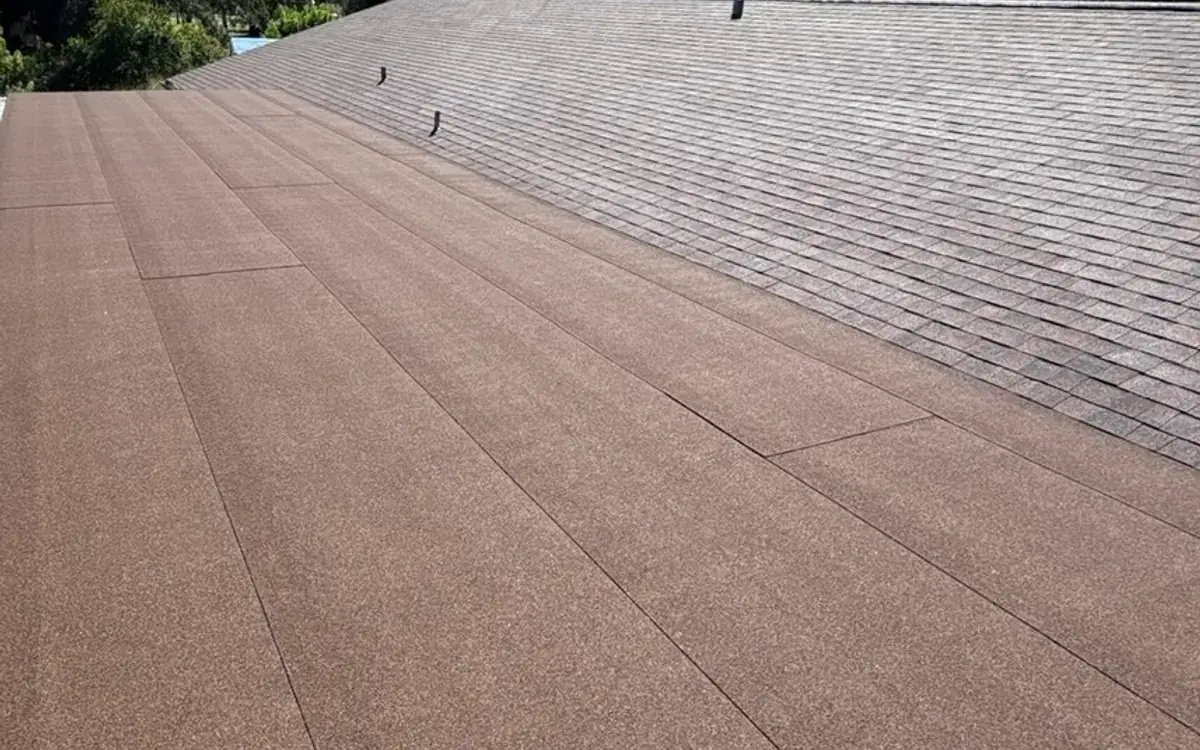

Materials
Asphalt Shingle vs. Metal Roofing in Florida: Which Is Right for You?
The two most common Tampa roofing decisions, side by side. Cost, lifespan, heat performance, storm rating, and resale. Everything that matters.
By Rene Diaz Jr, President · FL Certified Roofing Contractor CCC1330839
Published February 2, 2026 · 9 min read
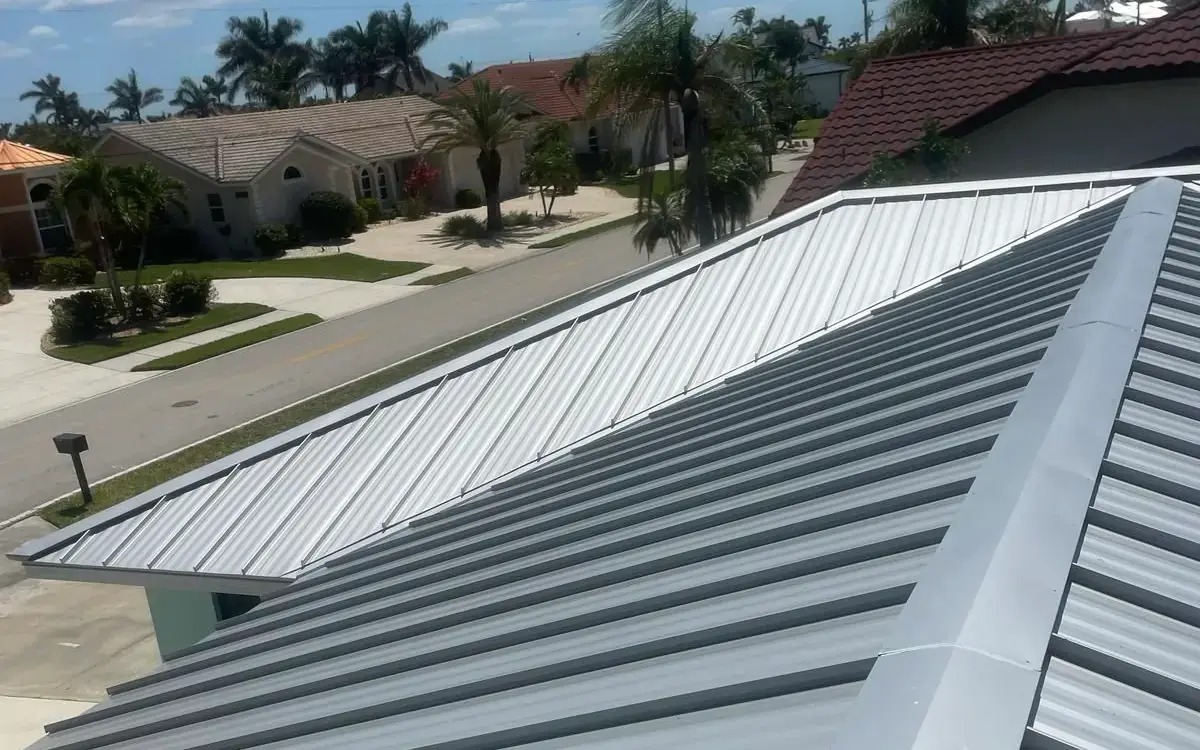
Two questions account for about 60% of every roof replacement conversation we have in Tampa: "Should I do shingles or metal?" and "Is metal worth the upcharge?"
Honest answer: it depends. Both materials are good. Both make sense in Tampa. The right pick depends on how long you'll own the home, what your insurance situation looks like, and how the architecture of the house carries each material.
Here's the comparison the way we explain it during a free inspection.
The quick verdict
If you'll own the home less than 8 years, asphalt shingle almost always wins. The cost difference doesn't have time to pay back.
If you'll own the home 15 years or more, metal often wins. Lower lifecycle cost, lower insurance premiums (in most cases), and you'll never replace it again.
Between 8 and 15 years, it's a judgment call based on aesthetics, insurance discounts available to you, and what the house looks like.
That's the short version. The rest of this post is the math behind it.
Cost comparison
For a typical 2,500-sq-ft-footprint Tampa home (about 30 squares of roof surface):
| Material | Installed cost (2026) | Per sq ft |
|---|---|---|
| Standard asphalt shingle (3-tab) | $11,000–$14,000 | $4–$5 |
| Architectural asphalt shingle | $13,000–$19,000 | $5–$7 |
| Premium architectural (50-yr warranty) | $16,000–$22,000 | $6–$8 |
| Stamped metal panel (screw-down) | $20,000–$28,000 | $8–$11 |
| Standing-seam metal | $28,000–$45,000 | $11–$18 |
The range depends on roof complexity, decking condition, and warranty tier. We break down all of this in our Tampa roof replacement cost guide.
For most Tampa homeowners, the practical comparison is architectural asphalt vs standing-seam metal. The two materials we install most often. Standing seam runs roughly $10,000–$18,000 more on a typical mid-size home.
Lifespan comparison
This is where metal earns the upcharge.
Asphalt shingles in Florida:
- Manufacturer-rated lifespan: 25–30 years (premium 40–50)
- Real-world Tampa lifespan: 18–22 years
The Florida sun, humidity, and storm cycle shorten asphalt shingle life by about 25% compared with the same shingle in milder climates. We replace plenty of 18-year-old roofs in Tampa that would still have life in them in Pennsylvania.
Metal roofs in Florida:
- Manufacturer-rated lifespan: 40–70 years
- Real-world Tampa lifespan: 40–55 years
Metal doesn't have the same UV degradation profile as asphalt. The paint may fade. The fasteners (on screw-down systems) may need replacement around year 20–25. But the metal itself outlasts asphalt 2–3x in Florida conditions.
Lifecycle math for a homeowner who'll be in the house 30 years:
- Two asphalt replacements (~$16,000 each in today's dollars, before inflation): $32,000+
- One metal replacement (~$30,000): $30,000
Even before factoring in insurance savings, a long-tenure homeowner often comes out even or ahead with metal.
For more detail on each, see our asphalt shingle materials page and the metal roofing page. For Tampa-specific metal cost, system types, and a metal-vs-shingle comparison, see metal roofing in Tampa.
Florida heat performance
Tampa attics regularly hit 130–150°F in summer. The roof is the single biggest driver of cooling load.
Asphalt shingles:
- Standard dark colors absorb 80–90% of solar radiation
- Reflective ("cool roof") asphalt shingles cut absorption to ~50–60%
- Surface temperatures: 150–170°F
Metal:
- Light colors reflect 70–85% of solar radiation
- Even dark metal radiates heat much faster than asphalt
- Surface temperatures: 110–130°F (uncoated) or 95–115°F (cool-roof coated)
In real-world Tampa cooling-bill terms, a high-reflectance metal roof with proper attic ventilation saves homeowners typically $300–$700 per year on cooling costs vs a standard dark asphalt roof. Over a 30-year metal lifespan, that's $9,000–$21,000.
The catch: you need proper attic ventilation either way. A poorly ventilated attic with a metal roof underperforms a well-ventilated attic with shingles. Metal alone isn't a silver bullet. It's a better starting point.
Storm performance
Tampa Bay sees tropical storm and hurricane wind events most years. Roof material wind ratings matter.
Asphalt shingles:
- Standard wind rating: 110 mph
- Premium architectural shingles with 6-nail pattern: 130 mph
- Premium architectural shingles with enhanced sealing: 150 mph (Class H)
The 6-nail pattern matters. Most Florida code now requires it. Standard 4-nail patterns reduce the wind rating significantly and can void the warranty.
Metal:
- Stamped metal panels (screw-down): 130–140 mph
- Standing-seam metal (concealed-fastener systems): 150–180 mph
- Properly installed standing-seam: tested to 200+ mph in laboratory conditions
Standing-seam metal is, hands down, the best residential roofing material for direct hurricane wind events. The continuous panels and concealed fasteners give the wind nothing to grab. We've seen Hurricane Ian and Hurricane Idalia post-storm photos where standing-seam roofs are intact between neighboring asphalt roofs that lost half their shingles.
That said: a properly installed premium asphalt roof with the right wind rating can absolutely survive a Tampa hurricane. The difference is closer to "more peace of mind" than "decisive winner."
For storm preparedness in general, see our hurricane prep checklist.
Insurance implications
This is the area where the math has shifted significantly over the last few years.
Asphalt shingle:
- Most Florida carriers will write coverage on a properly installed shingle roof under 15 years old
- Roofs over 15 years are increasingly placed on Actual Cash Value (ACV) instead of Replacement Cost Value (RCV)
- Roofs over 20 years are non-renewing in some carrier markets
- Wind mitigation credits available for premium shingles + 6-nail + secondary water barrier
Metal:
- Most carriers offer wind mitigation credits of 10–25% for properly installed metal roofs
- Longer expected life means longer RCV coverage windows
- Some premium carriers explicitly prefer metal for new policies in coastal Florida zones
- Some carriers offer metal-specific discounts beyond the standard wind mitigation credit
On a typical Tampa home with $4,000/year in homeowners' premium, the metal-roof discount can be $500–$1,000 per year. Over a 30-year ownership, that's $15,000–$30,000. Easily enough to cover the metal-roof upcharge.
The catch: these discounts depend on a current wind mitigation inspection, which is good for five years. Get one done after any roof replacement, regardless of material.
For homeowners filing claims, our Florida insurance claim guide covers both the immediate process and the long-term policy strategy.
Resale value
A common myth is that metal roofs hurt resale because "buyers don't like the look."
Tampa real estate data tells a different story:
- Homes with metal roofs in Tampa typically sell for 3–6% more than comparable homes with asphalt
- Days on market are typically lower (buyers see "no roof to replace" as a major plus)
- Some FHA and VA loans now favor metal roofs in Florida coastal zones because of the longer expected life
The "buyers don't like metal" objection is mostly residual from older corrugated agricultural metal. Which was loud in rain, harsh-looking, and cheap. Modern residential metal (standing seam, stamped tile-look, snap-lock) is quiet, attractive, and reads as a premium upgrade to most buyers.
That said: aesthetics are aesthetics. Some neighborhoods (especially older South Tampa, Hyde Park, and historic districts) have HOA covenants that limit metal roof colors or styles. Check first. We've installed plenty of standing-seam metal in those neighborhoods, but some require specific "tile-look" stamped panels rather than visible standing seams.
The decision framework
Here's how we walk customers through the decision in person:
Pick asphalt shingle if:
- You'll own the home less than 8 years
- The architecture is contemporary suburban (most Tampa homes built 1980–2010)
- Your insurance is currently fine and not under threat
- Budget is the primary constraint
- You want the fastest, lowest-friction installation
Pick metal if:
- You'll own the home 15+ years
- You're in or near a coastal flood zone
- Your insurance is non-renewing or going to ACV on shingle roofs
- Cooling bills are a recurring frustration
- The architecture suits the look (Florida cracker, modern, mountain-style, or specific tile-look stamped metal for traditional homes)
- You're done thinking about the roof for the rest of your time in this house
It's a coin flip if:
- You'll own 8–15 years
- Insurance situation is uncertain
- The home is mid-modern with a contemporary roofline that could carry either material
We've installed both materials this week in Tampa. Both will be on Tampa roofs in 30 years. The right pick is the one that fits your timeline, your budget, your insurance situation, and the house.
What we don't recommend
A few options we generally steer customers away from:
- 3-tab asphalt shingles. The price savings vs architectural shingles is minimal, the lifespan is shorter, and the wind rating is lower. We rarely install these in Tampa anymore.
- Bargain-tier "mill finish" galvanized metal. Cheap and fast-rusting in Florida humidity. The installed cost difference vs proper Galvalume or painted steel isn't worth the durability hit.
- Screw-down "exposed fastener" metal on a primary residence. Fine for outbuildings and porch covers. The fastener gaskets fail every 15–20 years and need re-screwing across the entire roof. Standing-seam (concealed fastener) is worth the upgrade.
- Mixing materials across slopes unless there's a clear architectural reason. Visually awkward and harder to insure.
A quick word on tile
Tile is the third common Tampa material, and it's worth mentioning even though this post focuses on shingle vs metal.
Concrete and clay tile roofs are common in Spanish-style homes, older South Tampa neighborhoods, and parts of Hyde Park. Tile lasts 50+ years on the roof, but the underlayment beneath it needs replacing every 20–25 years — and that underlayment is what determines when the roof is actually due.
If your home has tile, our tile roofing page covers how tile performs in Florida and what drives a replacement.
How we quote both, side by side
When you call for an inspection, we'll give you the option of two quotes. One for asphalt, one for metal. On the same job. Same scope, same warranties, two materials. You see the real cost difference for your specific roof, and you make the call.
Most homeowners are surprised that the metal upcharge isn't as steep as they assumed. Some are surprised it's steeper. Either way, you have real numbers instead of national averages.
Schedule a free inspection
Call (813) 590-1124 or request a free inspection online. We'll be on your roof within 48 hours. We'll measure, photograph, and write you two itemized quotes. Asphalt and metal. For the same scope. You'll have everything you need to make the call.
We install both materials in Tampa, Brandon, Riverview, Wesley Chapel, and Clearwater every week. Most installs are completed in a single day. The Roof Gurus warranty workmanship for ten years and back the manufacturer's material warranties on every job.
Whichever material you pick, pick a contractor who'll still be here in twenty years to honor it.