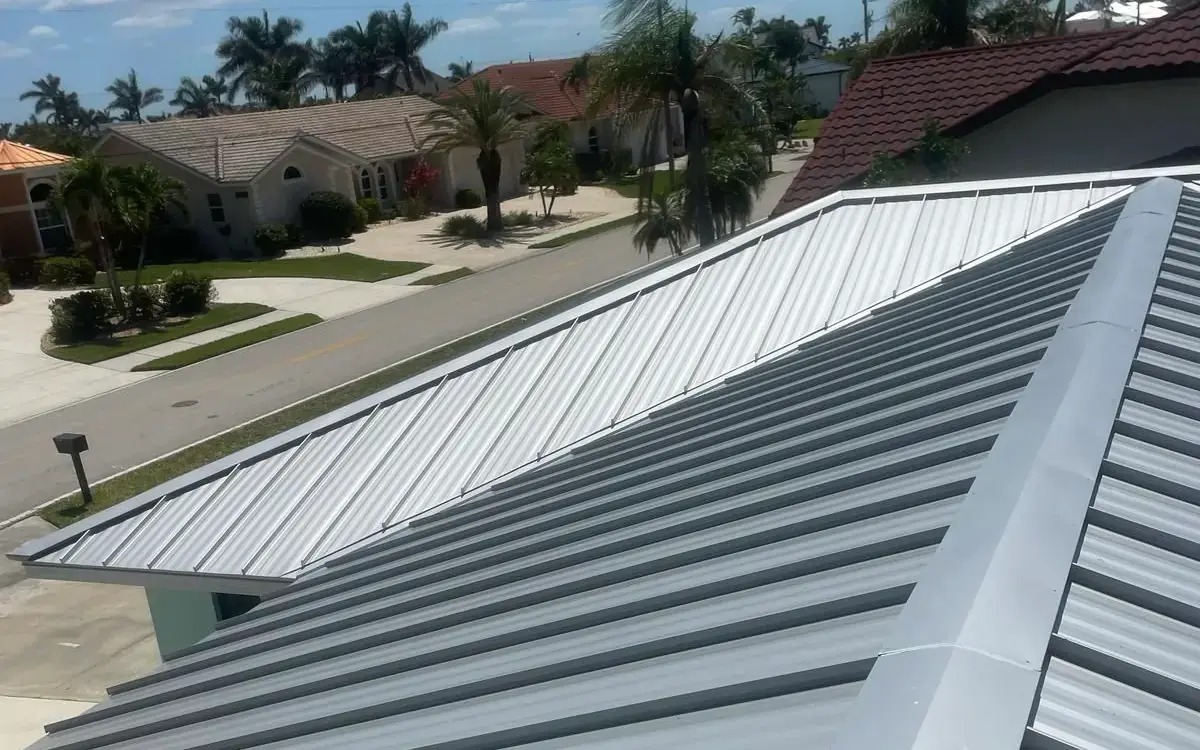

Materials
Florida Flat Roofs: TPO vs Modified Bitumen vs EPDM
Three flat roof systems, three best-fit applications. A Tampa comparison of TPO, modified bitumen and EPDM for commercial and residential roofs.
By Rene Diaz Jr, President · FL Certified Roofing Contractor CCC1330839
Published January 20, 2026 · 8 min read
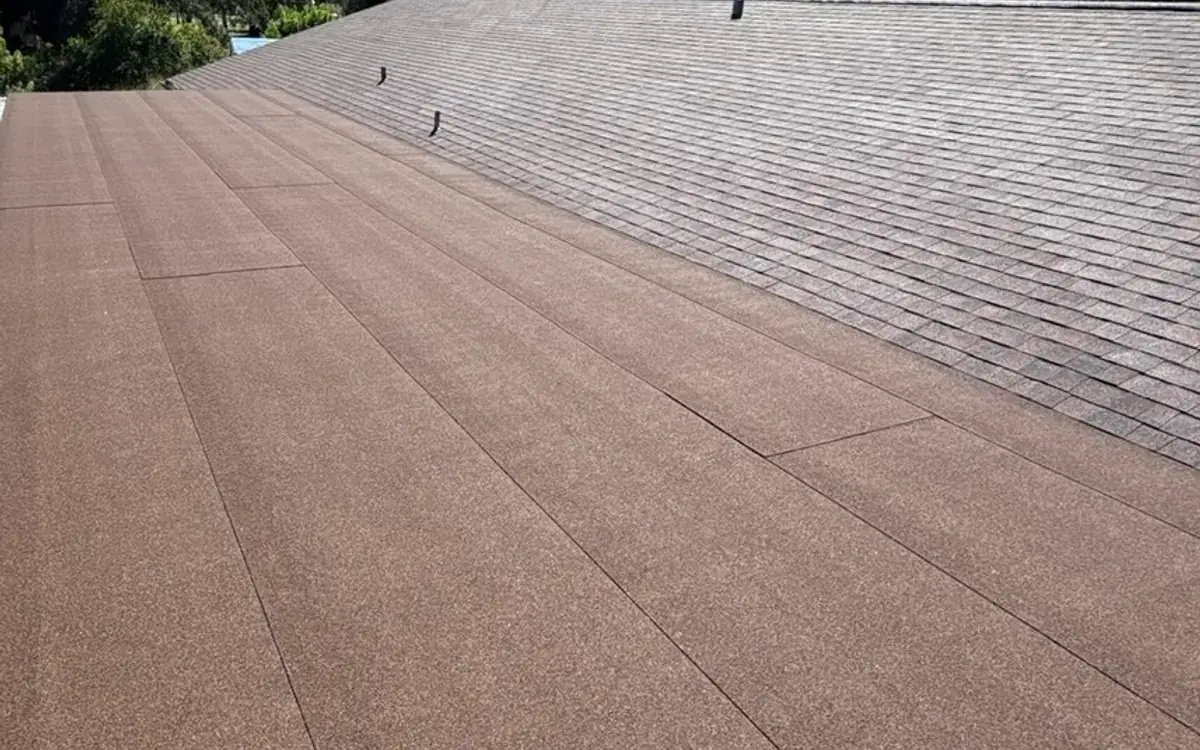
Three flat roof systems dominate Florida commercial and low-slope residential work: TPO, modified bitumen, and EPDM. Each has a clear best-fit application, and each fails differently when it's the wrong choice.
If you're a Tampa property owner with a flat roof that's leaking, getting older, or being added to a new build, this is the material comparison we walk through with every customer.
What "flat" actually means
Worth a quick clarification: no functional roof is truly flat. Every "flat" roof has a small slope (typically 1/4" per foot) to drain water toward gutters or interior drains. The category covers anything from low-slope residential (porches, additions, sunrooms) to large-scale commercial roofs covering tens of thousands of square feet.
In Tampa, the three most common flat-roof applications are:
- Commercial buildings. Strip centers, warehouses, office buildings
- Mixed-use residential. Modern Tampa homes with flat-roof sections, additions, carports
- Multifamily. Apartments, condos, townhomes with flat or low-slope sections
The right system depends on slope, foot traffic, climate exposure, budget, and expected service life.
TPO (Thermoplastic Polyolefin)
The most common new flat-roof installation in Tampa over the last decade.
What it is
A single-ply membrane made from a blend of polypropylene and ethylene-propylene rubber. Comes in white, gray, or tan. Typically 45-mil, 60-mil, or 80-mil thickness. Installed by mechanically fastening or fully adhering the membrane to the roof deck, then heat-welding the seams to create a continuous waterproof surface.
Pros
- Reflects heat exceptionally well. White TPO reflects 70–80% of solar radiation, dramatically reducing cooling load on the building below. Cool-roof rated.
- Heat-welded seams are the strongest seam type in any flat-roof system. Properly welded seams are stronger than the membrane itself.
- Lightweight. Adds minimal load to the structure.
- Fast installation. A skilled crew installs 1,000+ sq ft per day.
- Recyclable at end of service life.
- Strong wind uplift performance when properly installed and adhered.
Cons
- Quality varies dramatically by manufacturer. Bargain TPO products have had documented field failures. Premium brands (GAF EverGuard, Carlisle Sure-Weld, Firestone UltraPly) have strong long-term performance records.
- Sensitive to installation quality. A poorly heat-welded seam fails. The skill of the installer matters more on TPO than on most flat-roof systems.
- UV degradation over very long timelines. Premium TPO has held up well; we don't yet have 30-year field data on most current products.
- Can be punctured by foot traffic with sharp objects, debris, or heavy equipment.
Best for
- Commercial buildings with significant cooling needs
- Mixed-use buildings where reflectance matters
- New construction flat-roof additions
- Budgets in the mid-to-premium range
Cost
$7–$12 per sq ft installed in Tampa, depending on membrane thickness, manufacturer, and complexity.
Service life
15–25 years with quality membrane and proper installation. We're seeing better performance from premium products at the longer end of that range.
Modified Bitumen
The traditional Florida flat-roof system. Still installed widely, especially on commercial work.
What it is
A multi-layer asphalt-based roofing system. The base is a fiberglass or polyester reinforcing mat saturated with modified asphalt. Installed by either torch-down (heating the asphalt to bond it), self-adhered (peel-and-stick), or hot-mopped (asphalt applied with a mop).
Most installations include two or three layers. A base sheet and one or two cap sheets. To build a robust waterproof system.
Pros
- Proven track record. Modified bitumen has been installed in Florida since the 1970s. We have decades of real-world data.
- Excellent puncture resistance. Multi-layer construction means a single puncture rarely creates a leak.
- Good performance under foot traffic. Suitable for roofs with regular service access.
- Granulated cap sheets provide UV protection without coating.
- Self-adhered options eliminate fire risk during installation.
- Repairable. Localized damage can be patched easily by a competent crew.
Cons
- Heavier than single-ply. Adds load to the structure.
- Lower solar reflectance than TPO unless a reflective coating is added.
- Torch-down installation requires fire safety precautions and creates risk during installation.
- More labor-intensive than single-ply installations.
- Aesthetics. Visible from above (rooftop pools, drone shots, neighboring buildings), modified bitumen reads as more "industrial."
Best for
- Commercial buildings with rooftop equipment requiring service access
- Roofs with significant foot traffic
- Properties where puncture resistance matters more than reflectance
- Buildings where the roof is hidden from public view
- Budgets in the value-to-mid range
Cost
$6–$10 per sq ft installed in Tampa for a standard multi-ply system.
Service life
20–30 years for a properly installed multi-ply system. Often outlasts cheaper single-ply membranes.
EPDM (Ethylene Propylene Diene Monomer)
The black rubber roofing system. Still common nationally; less common in Florida than TPO or modified bitumen, but it has its place.
What it is
A single-ply synthetic rubber membrane. Almost always black (white EPDM exists but is rare). Installed by mechanically fastening, fully adhering, or ballasting (laying rocks on top to hold it down). Seams are joined with adhesive tape or liquid seam sealant.
Pros
- Excellent UV resistance. Among the longest-lasting flat-roof membranes in real-world installations, 25–40 years in moderate climates.
- Highly flexible. Handles thermal expansion and contraction better than most alternatives.
- Cold-weather performance. Stays flexible in temperatures where other membranes get brittle.
- Long track record. Installed since the 1960s; we have 50+ years of field data.
- Repairable. EPDM patches are straightforward.
- Lightweight. Minimal structural load.
Cons
- Black surface absorbs heat. This is the big one in Florida. A black EPDM roof in Tampa runs 30–50°F hotter than a white TPO roof. Cooling costs go up. Building interior is harder to manage.
- Adhesive seams are weaker than heat-welded seams. Long-term seam integrity depends on installation quality and primer coverage.
- Less common locally means fewer Tampa contractors specialize in it. Repairs may be slower or more expensive.
- Punctures more easily than modified bitumen.
Best for
- Northern climates where the black surface helps with snow melt and where summer heat is mild
- Commercial buildings where insulation is robust enough that surface heat doesn't matter
- Properties where the very long service life justifies the cooling cost trade-off
- Repair of existing EPDM systems (matching material is often the right answer)
Cost
$7–$11 per sq ft installed in Tampa.
Service life
25–40 years. The longest of the three systems on average.
Comparison table
| Factor | TPO | Modified Bitumen | EPDM |
|---|---|---|---|
| Cost (per sq ft installed) | $7–$12 | $6–$10 | $7–$11 |
| Service life | 15–25 yr | 20–30 yr | 25–40 yr |
| Solar reflectance | High (white) | Low to moderate | Very low (black) |
| Florida heat performance | Excellent | Good with coating | Poor |
| Puncture resistance | Moderate | Excellent | Moderate |
| Seam strength | Excellent (heat weld) | Excellent (multi-ply) | Moderate (adhesive) |
| Installation speed | Fast | Slower | Fast |
| Repairability | Good | Excellent | Good |
| Foot traffic tolerance | Moderate | Excellent | Moderate |
| UV stability | Good | Good (with granules) | Excellent |
A quick word on PVC
There's a fourth flat-roof material we install occasionally: PVC (polyvinyl chloride) single-ply membrane. It's similar to TPO in many ways but with chemical resistance characteristics that make it the right choice for restaurants, food processing, and any roof exposed to oils, fats, or harsh chemicals.
If your flat-roof project involves a kitchen exhaust, a chemical exhaust, or any application where the roof surface will be exposed to non-water contaminants, ask about PVC specifically.
What to ask any flat-roof contractor
Flat-roof work is more specialized than residential pitched roofing. Not every Tampa roofer installs flat systems well. When you're getting quotes, ask:
- What manufacturer and product line are you proposing? (Should be specific. "TPO" alone isn't enough.)
- What thickness? (45-mil, 60-mil, or 80-mil for TPO. Heavier is generally better in hurricane country.)
- Mechanically fastened or fully adhered? (Both are valid. The choice depends on the deck and the wind exposure.)
- What's the warranty on the membrane? (System warranties exist, but require certified installers.)
- Are you a certified installer for the manufacturer? (For premium warranties.)
- What's the seam strategy? (Heat-weld for TPO, multi-ply lap for modified bitumen, primer + tape or liquid seal for EPDM.)
- What's the drain detailing? (The single most common failure point is around drains. Detailing matters.)
- What's the perimeter and termination detail? (Bar termination + sealant minimum; better systems use coping or counter-flashing.)
- How will you handle penetrations? (Pre-fabricated boots vs field-fabricated. Pre-fab is generally more reliable.)
The contractor who answers all nine questions specifically and confidently is the contractor you want. The one who waves them off with "we use the good stuff" is not.
For broader contractor vetting, see our guide on choosing a Tampa roofer.
When to repair vs. when to replace
Flat roofs lend themselves to localized repair more than pitched roofs do. A patch in TPO is a heat-welded membrane patch. A patch in modified bitumen is a torch-down or self-adhered patch. A patch in EPDM is a primer + tape or liquid seal patch.
You can usually keep repairing a flat roof for years past its prime. The question is when the repair cost crosses into "should have replaced it" territory.
Rough rule: when annual repair costs reach 5% of replacement cost for two consecutive years, it's replacement time.
For commercial properties especially, the math also includes downtime cost. A leaking roof during business hours costs revenue, not just repair money. The total cost of "we'll patch it again" can be much higher than it looks on the roofing invoice.
Our commercial roofing service page goes into more detail on the commercial-side decision framework.
Schedule a flat-roof inspection
If you've got a flat roof in Tampa, Brandon, Riverview, Wesley Chapel, or Clearwater that's been leaking, aging, or just on your worry list, call (813) 590-1124 or request a free inspection online. We'll be on your roof within 48 hours. The inspection is free, the report is detailed with photos and a moisture map, and the recommendation is honest. Repair, restore, or replace.
We install all three systems regularly across Tampa Bay's commercial and residential mixed-use market. The right answer for your specific roof depends on the slope, the deck, the building use, the budget, and the timeline. And we'll help you sort through all of it without trying to upsell into a system that doesn't fit.
The Roof Gurus do flat-roof work right. Materials specified by name. Installations photographed at every stage. Warranties in writing. Most replacements completed in a single day for typical residential and small commercial applications.