Materials
Tile Roof Repair in Tampa: When to Lift-and-Relay vs Replace
Most tile roof leaks aren't tile failures. They're underlayment failures. A Tampa-specific guide to lift-and-relay vs full tile roof replacement.
By RoofX · January 8, 2026 · 8 min read
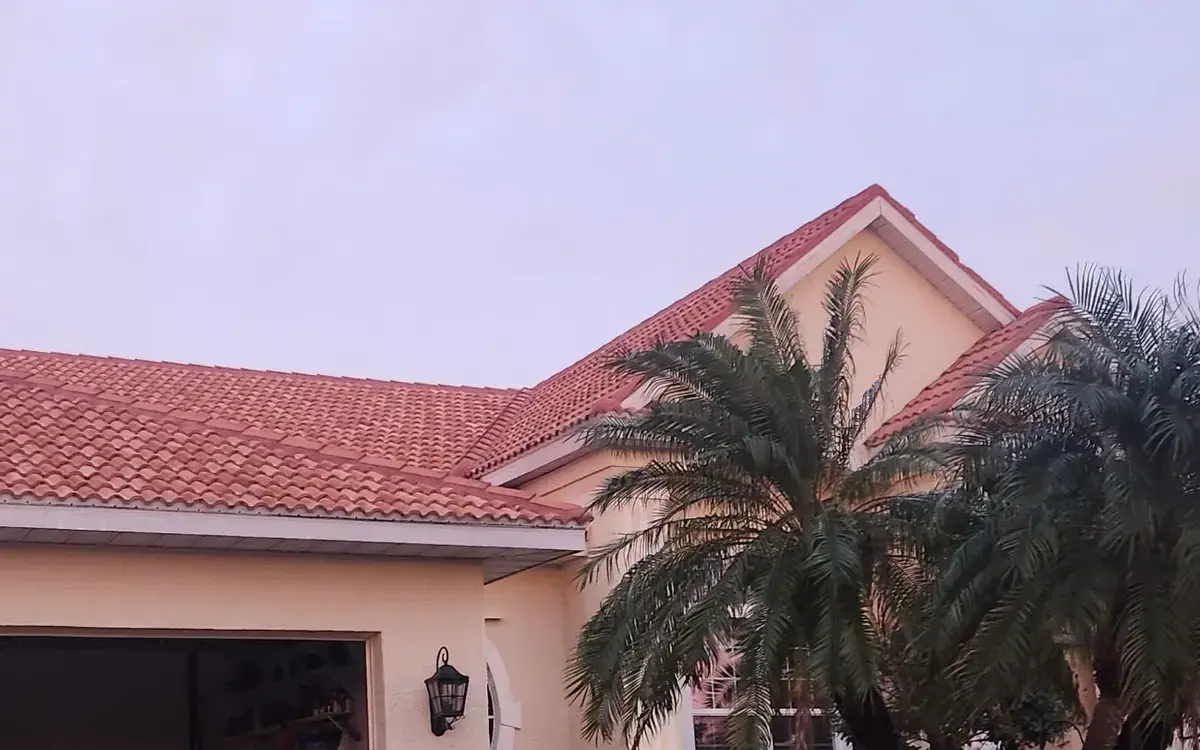
Most "tile roof leaks" in Tampa don't need new tile.
That's the single most useful sentence we can give a homeowner with a Spanish-style or Mediterranean-style home. The tile is fine. The thing under the tile is the problem. And the fix is a fraction of what a full tile replacement costs.
Here's how the system actually works, why the underlayment fails first, and how to know whether your home is a candidate for a lift-and-relay vs a full replacement.
The tile + underlayment system explained
A tile roof isn't really one thing. It's two things working together:
- The tiles. Concrete or clay, fastened to the roof in courses, designed to shed water by gravity and to look great doing it.
- The underlayment. A waterproof membrane (felt, modified bitumen, or self-adhered peel-and-stick) installed on the roof deck underneath the tile.
The tile is the visible weather barrier. The underlayment is the actual waterproof layer.
Tile sheds most of the water. But tile by itself is not waterproof. Wind-driven rain, heavy storms, and any damaged tile will let water through to the underlayment, which is what actually keeps water out of your house.
This matters because the two layers age completely differently:
- Concrete or clay tile: 50+ year service life. The actual tiles can outlast the home.
- Standard tile underlayment: 20–25 years before significant degradation begins. Sometimes less in Florida sun.
So on a 25-year-old tile roof, the tiles look great and probably are great. The underlayment beneath them is at end of life. Water that used to be deflected back up onto the tile now finds a path through the underlayment to the deck. And from there, into your house.
Why most leaks are underlayment failures, not tile failures
A few patterns we see almost every week:
- Active leak inside, tiles look fine from above. Underlayment.
- Leak only during heavy wind-driven rain. Underlayment around penetrations.
- Leak that comes and goes seasonally. Underlayment with localized failures.
- Leak after a storm, no obvious tile damage. Underlayment punctures from impact or wind uplift.
When we inspect a leaking tile roof, the first thing we do is lift a few tiles in the suspect area and look at the underlayment beneath. About 80% of the time, the issue is right there: cracked, brittle, perforated, or just exhausted membrane.
A handful of cracked tiles on top of solid underlayment can be replaced individually for a few hundred dollars. That's a routine tile repair. But cracked tiles on top of failed underlayment is a system-level problem. Replacing the visible tiles only buys you weeks before the next leak.
The lift-and-relay process
When the underlayment has failed but the tiles are still in good shape, the right answer is a lift-and-relay.
Here's what that actually involves:
Step 1: Inspection and tile assessment
Before quoting, we walk the roof and inspect the tile condition specifically. We're looking for:
- Number of cracked or broken tiles (each one is a replacement cost)
- Whether the existing tile profile is still available (some discontinued lines require partial-replacement creativity)
- Whether the tile has been previously walked on roughly (older tile is more brittle)
- Underlayment condition in multiple test locations
If 60% or more of the existing tile is still in good condition, you're a candidate for lift-and-relay. If less, the math may push toward full replacement.
Step 2: Tile removal
Each tile is lifted by hand and carefully stacked on the roof or staged on the ground. Concrete tiles weigh 9–12 lbs each; clay tiles can weigh 6–10 lbs. A typical Tampa tile roof has 4,000–8,000 individual tiles.
This is not fast work. A skilled crew of 5–6 will remove the tiles from a typical 30-square roof in 1–2 days.
Step 3: Old underlayment removal and deck inspection
With the tile off, we strip the existing underlayment. Then we inspect the wood deck. Looking for soft spots, water damage, rotted sheathing, and structural issues that were hidden by the tile.
Any damaged decking gets replaced (typically $100–$150 per sheet, billed as needed). The structural integrity of the system depends on solid sheathing.
Step 4: New underlayment installation
This is the heart of the job. The new underlayment is the actual waterproof layer for the next 20–25 years. We use a self-adhered peel-and-stick membrane on the entire deck, with extra detailing at penetrations, valleys, and the perimeter.
Modern underlayment is dramatically better than what was on most older Tampa homes. Self-adhered peel-and-stick membranes seal around fasteners, resist tearing, and stay in place under wind-driven rain in ways the old felt-based products couldn't.
Step 5: Tile reinstallation
The original tiles go back on, course by course. Cracked or damaged tiles are replaced from inventory or from salvaged stock. Each tile is fastened (or foamed, depending on the original system and current code) per Florida high-wind installation standards.
The end result: same tile roof you had, but with a new 25-year waterproof system underneath.
Step 6: Final detailing
Ridge caps, hip caps, valleys, and penetrations all get re-flashed with new copper or galvanized metal. Pipe boots are replaced (always. Never reused). The roof is photographed before, during, and after.
Total time on a typical Tampa tile lift-and-relay: 3–5 days from first day on site to cleanup.
When tile actually needs replacement
Lift-and-relay is the right answer 70%+ of the time. But sometimes the tile itself is the problem:
- Heavy hurricane damage that broke a large percentage of the field tiles
- Severely brittle tile that breaks during removal more often than it survives (common on neglected 40+ year old roofs)
- Discontinued tile profiles with no compatible replacement available, where too many breakages would create an aesthetic patchwork
- Structural issues that require deck reinforcement requiring tile removal anyway
- Aesthetic upgrade. Homeowner wants a different tile profile or color
In those cases, full replacement is the right call. New tile + new underlayment + new flashings on the same roof structure.
A few less-common scenarios where we recommend switching from tile to a different material:
- HOA permits are no longer available for tile in some neighborhoods
- The structure was never properly engineered for the tile load and is showing signs of strain
- Insurance is non-renewing on aged tile roofs and the homeowner wants a fresh start with a different material
Cost comparison
Real Tampa numbers for 2026:
| Job type | Typical cost (mid-size home) | Service life |
|---|---|---|
| Targeted tile leak repair (a few tiles + flashing) | $500–$2,500 | Variable |
| Tile lift-and-relay (full underlayment replacement) | $14,000–$22,000 | 20–25 years on the underlayment, 30+ on the tile |
| Full tile roof replacement (new tile + new underlayment) | $30,000–$55,000 | 30–50 years |
| Switch from tile to architectural shingle | $15,000–$22,000 | 18–22 years |
| Switch from tile to standing-seam metal | $30,000–$45,000 | 40–55 years |
The math on lift-and-relay vs full replacement is usually clear: if your tile is still in good shape, lift-and-relay is roughly half the cost and resets the waterproof system to new condition. The aesthetic stays identical because it's the same tile.
We cover the broader Tampa replacement cost picture for homeowners weighing different material options.
Tampa neighborhoods where this matters most
Tile roofs are most concentrated in a few Tampa areas:
South Tampa. The Beach Park, Sunset Park, and Davis Islands neighborhoods have a high density of Spanish-style and Mediterranean-style homes from the 1920s–1940s. Many of these homes have been re-roofed once already, often with tile lift-and-relays in the 1990s or 2000s. Those are coming up for their next round of underlayment work right now.
Hyde Park. Historic district with strict architectural review boards. Tile is often required by HOA covenants. Lift-and-relay is the strongly preferred approach here because it preserves the original tile aesthetic while resetting waterproofing to current code.
New Tampa. Newer construction (Tampa Palms, Hunters Green, Cory Lake Isles) used a lot of concrete tile in the 1990s and early 2000s. Those underlayments are now 20–30 years old. We're doing more lift-and-relays in New Tampa than anywhere else in the metro.
If you're in one of these neighborhoods and your tile roof is over 20 years old, an inspection is worth scheduling even if you haven't seen a leak yet. Catching the underlayment failure before it becomes a wet ceiling is dramatically cheaper than catching it after.
What to ask your tile roofer
Not every Tampa roofer does tile work well. The skill set is different from shingle work. When you're getting tile quotes, ask:
- How many tile lift-and-relays have you done in the last 12 months?
- Can you show me three local references on tile lift-and-relays we can drive to and look at?
- What underlayment system are you proposing? (Should be a self-adhered peel-and-stick, modern formulation.)
- How are you handling tile breakage? (Some breakage is inevitable. The plan should be specific.)
- What's the warranty on the underlayment specifically?
- How long will the work take?
- What happens to the existing tile during the work? (Stacked carefully, not piled or thrown.)
Tile work that goes wrong is expensive to redo. The right contractor matters even more on tile than on shingle.
For the broader contractor vetting process, see our how to choose a Tampa roofer guide.
Schedule a tile inspection
If you have a tile roof in Tampa and you're either seeing leaks or just want to know what state the underlayment is in, call (813) 590-1124 or request a free inspection online. We'll be on your roof within 48 hours.
The inspection is free. The report is honest. We'll lift a few tiles in test locations to actually look at the underlayment, photograph the findings, and tell you straight: targeted repair, lift-and-relay, or full replacement. About a third of the tile inspections we do come back as "you've got 3–5 more years before it's time." We'll tell you that too.
We've done lift-and-relays across South Tampa, Hyde Park, New Tampa, Brandon, and Wesley Chapel since 2015. The Roof Gurus know the difference between tile that's tired and tile that just needs new bones underneath. Most of our tile repair work is exactly that. Figuring out which problem is which, and fixing the right one.