
Storm & Insurance
How to File a Roof Insurance Claim in Florida (Step-by-Step)
A Tampa storm damaged your roof. Here's the exact order to do things. Documenting, calling the carrier, working with the adjuster, and getting paid fairly.
By Rene Diaz Jr, President · FL Certified Roofing Contractor CCC1330839
Published April 8, 2026 · 12 min read
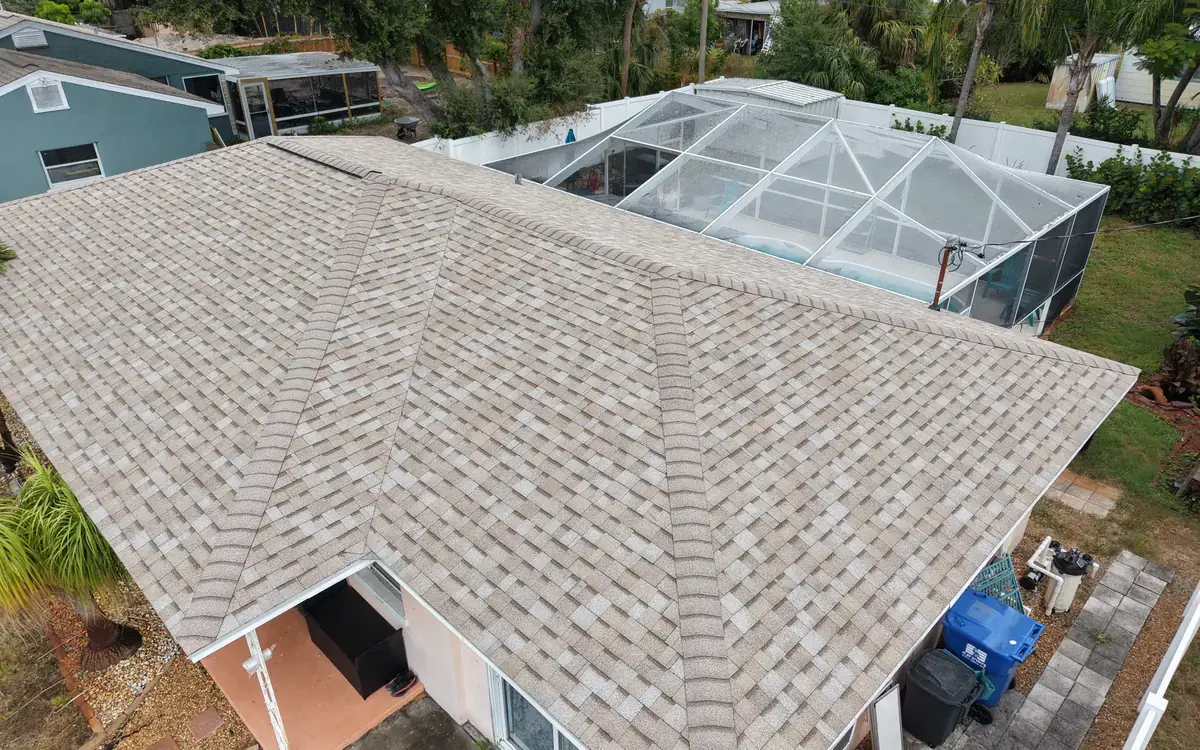
A Tampa storm just damaged your roof. The shingles are scattered in your yard. Water is dripping into the kitchen. You've never filed a claim like this before, and the next 48 hours will determine whether you get a clean settlement or a six-month fight.
Here's exactly what to do, in the order you should do it.
We've handled hundreds of Florida roof insurance claims. Most go fine when the homeowner moves quickly and documents thoroughly. The ones that drag on are usually the ones where someone skipped a step in the first day.
This is long because the details matter. Bookmark it.
Before you file: the 24-hour action plan
The single biggest mistake we see is homeowners calling their insurance carrier before they've stabilized the property and documented the damage. Once you open the claim, the clock starts. You want to be ahead of it.
Within the first hour after the storm passes:
- Confirm everyone is safe.
- Walk the perimeter from the ground. Don't get on the roof. Don't enter rooms with sagging or stained ceilings.
- Take wide-shot photos of all four sides of the house. Get the yard, the driveway, the trees, the obvious debris.
- If water is coming through a ceiling, place buckets and towels. Move furniture. Photograph the active leak.
- If you have an active hole in the roof or active water intrusion, call us at (813) 590-1124. Our emergency roof repair crew tarps Tampa roofs around the clock during storm events. We document everything before, during, and after.
Within the first six hours:
- Take detailed photos of every damaged area. We have a full guide on this in our storm damage photo walkthrough.
- Make a written list of everything you've noticed: missing shingles, ceiling stains, broken tiles in the yard, soffit damage, gutter damage. Time-stamp the list.
- Locate your insurance policy. Pull the declarations page. You need: carrier name, policy number, agent contact info, deductible amounts, and what type of coverage you have on the roof (RCV vs ACV. More on this below).
Within the first 24 hours:
- Mitigate further damage. Tarps go on. Buckets get placed. Wet drywall gets removed if it's already collapsing. Do not throw anything away. Debris is evidence.
- Save every receipt. Tarps, plywood, bottled water if you've lost power, hotel stays, anything related to the damage.
- Open the claim with your carrier. The number to call is on the dec page or your insurance card.
Documenting damage properly
Insurance adjusters work from photos and notes. Period. The better your documentation, the more confident the adjuster is that the scope they write reflects reality. The thinner your documentation, the more likely they are to write a tight scope that misses things.
The five rules of documentation:
- Date and time. Your phone does this automatically if location services are on. Verify before the storm that geotagging and timestamps are enabled.
- Multiple angles for everything. A damaged shingle deserves three photos: wide (showing the elevation of the house), medium (showing the slope), close (showing the damage itself).
- A reference object. Place a tape measure, a pencil, or a quarter next to small damage so scale is obvious.
- Interior + exterior. Every claim where there's water intrusion needs both: the entry point on the roof and the consequence inside.
- Volume over curation. Take 200 photos. You can delete bad ones later. You can't go back and re-photograph after the tarp is on.
The full shot list. By elevation, by penetration, by interior room. Is in our storm documentation guide. Print it. Tape it inside a kitchen cabinet. You'll be glad you did.
Calling your insurer
Pick a quiet moment. Have your dec page in front of you. Have a notepad open.
When you call, be factual. The script is roughly:
"Hi, I need to open a homeowners claim. We had storm damage to our roof from the storm on [date]. There's [active leak / missing shingles / fallen tree on the roof]. I have photos. I need a claim number and the next steps."
Write down:
- Date and time of the call
- Name of the agent or rep
- Claim number
- The adjuster's name (if assigned during the call)
- What you were told happens next
- Any deadlines they mention
Don't speculate about cause. Don't estimate the cost of the damage. Don't say "the roof is old." Stick to what you observed.
Florida has specific timelines under FS 627.70131. Your insurer must acknowledge the claim within 14 days, begin investigation within 14 days, and tender a settlement decision within 60 days. Note all of those dates in a claim journal.
If something feels off. Long delays, missed callbacks, conflicting information from different reps. The Florida Department of Financial Services has a consumer helpline and a complaint portal. Don't be shy about using either one.
Working with your adjuster
The adjuster will schedule an on-site inspection. Their job is to write a scope of repair and an estimate. They are professionals, but they work for the carrier. They are not your advocate.
Before the adjuster arrives:
- Have a roofer inspect first if you can. We can schedule a free inspection and walk the roof with proper safety gear and a moisture meter. We'll mark damage with chalk, photograph everything, and prepare a written report. That report. And ideally our presence. At the adjuster meeting can change the conversation.
- Be home for the inspection. Walk the property with the adjuster. Point things out. Don't argue. Just make sure they see what you see.
- Provide your photos and notes. Don't dump 200 photos on them. Provide an organized summary with the most important shots highlighted.
During the adjuster's visit:
- Take photos of the adjuster's photos and tools. (Yes, really. We've had cases where adjusters claimed to have inspected things they didn't, and a homeowner photo of the adjuster on a different slope cleared it up.)
- Note what the adjuster says about cause. They'll often say things like "this looks like wear" or "this is hail." Those words determine whether the damage is covered.
- Don't agree to anything verbally. "I'll review the report when I receive it" is a complete sentence.
After the adjuster's visit:
- The adjuster sends a Scope of Loss and an estimate. Read both line by line.
- Compare against your roofer's report.
- Note any items missing, undervalued, or marked "wear and tear" that your roofer attributes to storm damage.
Reviewing your settlement
The settlement letter is the single most important document in the claim. Read every line.
You're checking three things:
- Coverage type. Is the carrier paying Replacement Cost Value (RCV) or Actual Cash Value (ACV)? RCV pays what it costs to replace. ACV depreciates the roof's age. On an 18-year-old roof, ACV can be 40–60% lower than RCV.
- Scope completeness. Does the estimate include underlayment, drip edge, ice-and-water at penetrations, code-required upgrades, ridge ventilation, debris haul-off, permits, and tax? Florida code (the FBC and FBC-R) often requires items the adjuster's software doesn't auto-add. Missing line items are the most common form of underpayment we see.
- Math. Add the line items yourself. Subtract the deductible. Compare to the check amount. Carriers make math errors, and the burden is on you to catch them.
If something is wrong, you don't accept by default. You can dispute, request a re-inspection, or invoke the appraisal clause in your policy.
What to do if your claim is denied or under-paid
About one in four Florida roof claims comes back denied or significantly under-paid on the first pass. Don't panic. The system has remedies.
Step 1: Read the denial letter carefully. It must state a specific reason. "Wear and tear," "pre-existing damage," and "maintenance issue" are the three most common reasons. Each has a counter.
Step 2: Request a re-inspection. You're allowed to. Ask in writing. State that you have additional documentation (your roofer's report) that wasn't reviewed.
Step 3: Get an independent expert opinion. A licensed roofing contractor or a public adjuster can write a counter-report. We do this regularly for Tampa homeowners we've worked with on the insurance claim process. Our reports are based on what we measured, photographed, and tested on your roof.
Step 4: Invoke the appraisal clause. Most Florida homeowners' policies include an appraisal provision: each side picks an appraiser, the two appraisers pick an umpire, and the three resolve scope disputes outside of litigation. It's faster and cheaper than a lawsuit, and it's effective for scope and value disagreements (but not for coverage denials).
Step 5: File a complaint with the Florida DFS. The DFS consumer complaint portal is free, doesn't require an attorney, and is taken seriously by carriers.
Step 6: Hire an attorney as a last resort. Florida's bad-faith and unfair claims handling laws give homeowners real leverage, but litigation is slow and expensive. Most claims resolve without it.
Common Florida claim pitfalls
After hundreds of these, here are the mistakes we see most often:
- Waiting too long to file. Florida law gives you a window to report (currently one year for hurricane claims, less for other claims), but the practical window is much shorter. Photographs degrade. Memory degrades. File within days, not weeks.
- Throwing away debris. Don't. Pile it neatly somewhere on the property until the adjuster has seen it.
- DIY repairs before documentation. A patch on the roof before photos can tank the entire claim.
- Signing an Assignment of Benefits (AOB) you don't understand. AOBs were heavily regulated in Florida in 2019 and again in 2022. Some are legitimate. Some hand your entire claim to a contractor with no oversight. Read the fine print, and don't sign one in your driveway.
- Talking too much to the adjuster. Be honest, be brief, point out facts. Don't volunteer narratives. "I noticed the leak Wednesday morning" beats "well, the roof has been weird since the kitchen remodel three years ago."
- Accepting the first check as final. It often isn't. RCV claims are usually paid in two parts: ACV up front, depreciation withheld until repairs are completed and invoices are submitted. If you only get the ACV check, you may be entitled to the depreciation balance after the work is done.
- Letting the deductible eat the claim. If your damage is close to your hurricane deductible, sometimes filing isn't worth it. If it's well above, file. Run the math honestly.
When to hire a public adjuster vs. a roofer
This is a question we get every week, and the honest answer is: it depends on the claim.
A public adjuster is a licensed professional who represents you (not the carrier) in the claim. They typically charge 10–20% of the settlement. They're worth considering when:
- The damage is significant (over $20,000 estimated)
- The carrier has denied or low-balled the first estimate
- The claim involves multiple coverage areas (roof + interior + contents + ALE)
- You don't have the time or stomach to fight it yourself
A roofing contractor (us) can:
- Inspect your roof for free and document damage thoroughly
- Provide a written scope and estimate the carrier will accept
- Communicate with your adjuster about the technical scope of repair
- Repair or replace the roof to code, with full documentation
What we cannot do under current Florida law (post-SB 76 and follow-on legislation): we cannot negotiate the settlement amount, advertise to "handle your claim," or accept payment as a percentage of the recovery. The line between roofer and public adjuster is now drawn clearly. We respect it. Anyone telling you otherwise is taking a legal risk you don't want to share.
For most homeowners with straightforward roof damage, a good roofer is enough. For complex or contested claims, a public adjuster + a roofer is often the right combination.
A quick comparison: RCV vs ACV settlements
| Scenario | RCV Settlement | ACV Settlement |
|---|---|---|
| 18-year-old shingle roof, full replacement needed | Carrier pays full replacement cost minus deductible | Carrier pays depreciated value minus deductible |
| Typical Tampa example: $18,000 replacement | ~$15,500 to homeowner | ~$7,000–$10,000 to homeowner |
| Out-of-pocket gap | Just the deductible | Deductible + depreciation gap |
If your roof is over 10–15 years old, check your declarations page now to see whether your carrier has placed your roof on ACV. This single line on your policy is the difference between "rough month" and "financial setback."
When to call us
Call us at (813) 590-1124 any time you need a free, professional roof inspection in Tampa, Brandon, Riverview, Wesley Chapel, or Clearwater. We'll be on your roof within 48 hours of the call. The inspection is free. The report is detailed. And we will tell you honestly whether your damage is worth filing a claim for, marginal, or clearly catastrophic.
We don't charge to walk an adjuster through a roof. We don't charge to write a scope. We charge for the work we do once a claim is funded. And that work is documented, code-compliant, and warranted.
For an overview of how the claim process works and how we help at each stage, see our Florida roof insurance claim help page. If you're in the Tampa area, our insurance claim hub covers the local process with claim checklists you can download. Most Tampa roofs we replace post-storm are completed in a single day, and we handle every line of communication with the carrier from inspection through final invoice.
The Roof Gurus have been doing this work since 2015, with 50+ years of combined crew experience behind it. Let us help.