
Roofing 101
7 Warning Signs Your Tampa Roof Needs Replacement
Most Tampa roofs need replacement at year 18-22. Here are the seven signs you've reached the window. And what to do once you spot them.
By Rene Diaz Jr, President · FL Certified Roofing Contractor CCC1330839
Published March 12, 2026 · 7 min read
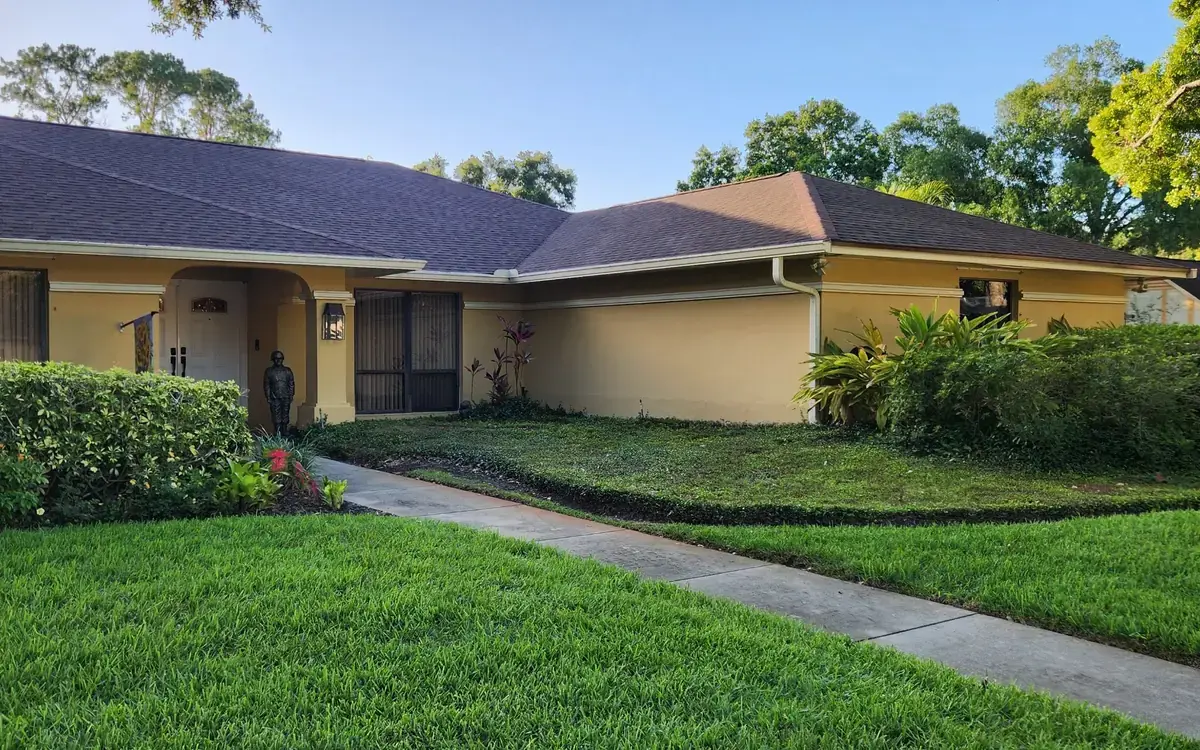
Most Tampa roofs need replacement somewhere between year 18 and year 22. Florida sun, hurricane season, and humidity shorten asphalt shingle life by roughly 25% compared with the same materials in milder climates. So if your roof is over 15 years old, the question isn't if. It's when.
Here are the seven signs we look for during every Tampa inspection. If you spot two or more of these, schedule a free inspection and we'll give you a straight answer.
1. Curling, cupping, or clawing shingles
Healthy asphalt shingles lay flat. As they age, the asphalt loses oils and the felt mat beneath them shrinks. The result is one of three patterns:
- Curling. The corners turn up like potato chips
- Cupping. The centers dish down while the edges raise
- Clawing. The bottom edge curls back in on itself
You can usually see this from the ground with binoculars. Walk the perimeter on a sunny afternoon. Look for shingles that don't sit flush with the rest of the field. If half your roof has visible movement, you're past the point where targeted roof repair is the right call.
2. Granule loss in gutters
Asphalt shingles are protected by a layer of mineral granules. Those granules wear off with age and weather. A handful in your gutters after a hard storm is normal. A consistent quarter-inch of asphalt grit at every downspout means your shingles are on borrowed time.
Granule-stripped shingles are also lighter (lower wind ratings), more prone to cracking under the next hard rain, and bald patches accelerate UV damage to whatever's left underneath. Once granule loss is widespread, the underlayment becomes the next thing in line. And underlayment failure is how interior leaks start.
Check this twice a year: at the end of dry season (May) and after the first heavy rain in September.
3. Multiple repaired leaks in different areas
One leak is a roof problem. Three leaks in three different spots over five years is a system problem.
Florida roofing systems are exactly that. Systems. Underlayment, shingles or tiles, flashings, ventilation, sealants. When a roof reaches end of life, every component starts failing at roughly the same time. You'll patch a leak at the chimney, then six months later there's a new one at the bathroom vent, then the valley starts dripping next storm.
Each individual repair is reasonable. The pattern isn't. If you've paid for three or more separate roof repairs in different areas in the last three to five years, the math is no longer in your favor. A full replacement usually pays back inside a year or two through stopped repair bills, lower insurance premiums, and avoided interior damage.
4. Visible sagging anywhere on the roofline
Stand across the street from your house and look at the ridge line. It should be straight as a chalk line.
If you see a dip, a wave, or a soft spot where the roof seems to bow downward, that is a structural concern. The most common causes:
- Saturated decking from long-term water intrusion (the plywood is mush)
- Failed rafters or trusses from termite damage or chronic moisture
- Overloaded structure from too many layers of shingles (Florida code allows two layers max; a lot of older homes have three)
A sagging roof is not a "monitor it" item. It's a "stop driving past it and call somebody this week" item. We don't charge to come look. Call (813) 590-1124 and we'll be there fast.
5. Daylight visible from inside the attic
Climb into your attic with a flashlight on a sunny afternoon. Turn the flashlight off. Look up.
You should see no light coming through the roof deck.
Pinpoint dots of daylight are nail holes that have backed out, gaps around penetrations, or small punctures from debris. Those can be patched. Bands or shafts of daylight mean the deck has separated, the underlayment is gone, or there are missing components above. That's a replacement conversation.
While you're up there, also check for:
- Wet insulation. Dark stains, matted fibers, or visible mold
- Sagging deck between rafters
- Daylight at the ridge. Common when ridge cap shingles have failed
- Pinch a piece of insulation. If it crumbles, it's been wet a while
6. Algae streaking that won't clean
Those black streaks running down the slopes of your roof are Gloeocapsa magma, a hardy cyanobacteria that loves Florida humidity. On a healthy roof, a soft-wash cleaning removes them and they take a couple of years to come back.
On an older roof, the algae has eaten into the shingle's mineral surface enough that no cleaning fully restores the look. The streaks return within months. The shingle is now a damp, organic substrate. Exactly what the bacteria want. And the cycle accelerates.
If you've cleaned the roof in the last three years and the streaks are already back darker than before, you're looking at a shingle that has lost its weather-shedding ability. Cleaning it again won't fix that.
For homeowners in South Tampa, Hyde Park, and other older neighborhoods with mature tree canopies, algae is a chronic issue we see on roofs every year. Modern algae-resistant shingles (most major manufacturers offer them now) carry a 10-year algae warranty and stay clean noticeably longer.
7. Your insurance company has flagged your roof
In Florida, this is the warning sign that costs you the most.
Carriers are non-renewing or refusing to write policies on roofs over 20–25 years old, regardless of condition. Some are dropping ACV settlements on roofs over 10 or 15 years old. Some are requiring a 4-point inspection before renewal and using its findings to refuse coverage.
If you've received any of the following, your roof is likely the reason:
- A non-renewal letter
- A renewal with a steep premium increase
- A demand for a 4-point inspection or wind mitigation update
- A letter requiring photo documentation of the roof
- Notice that your roof is now on Actual Cash Value rather than Replacement Cost Value
Replacing a roof to satisfy an insurance carrier is rarely the homeowner's first choice. But the math often works: the difference between an ACV roof claim and an RCV claim, multiplied by the rising hurricane risk, makes proactive replacement cheaper than reactive replacement after a storm.
We've replaced hundreds of roofs in Brandon, Riverview, and New Tampa specifically to reset insurance terms. The new roof typically pays for itself in 3–6 years through premium savings alone.
The verdict: replace vs. repair
Here's the simple framework we use after every Tampa inspection:
| Situation | Recommendation |
|---|---|
| One isolated issue, roof under 12 years old | Targeted repair |
| Two issues, roof 12–17 years old | Repair, but plan for replacement in 3–5 years |
| Three or more issues, roof 15+ years old | Replacement |
| Any structural sag, widespread granule loss, or insurance non-renewal | Replacement |
| Roof over 20 years old, even if it "looks fine" | Inspection + frank conversation |
A repair pays off when it buys meaningful additional life. It's a bad investment when it's a $1,500 patch on a roof that needs $15,000 of work in 18 months anyway.
What we do on a replacement evaluation
When you call us for a replacement evaluation, here's what happens:
- Free inspection within 48 hours of your call. We're on the roof, in the attic, and around the perimeter with cameras and moisture meters.
- Written report with photos of every concern, marked on a diagram of your roof.
- Honest recommendation. Repair, replace, or wait. About 30% of our inspections come back as "wait two years," and we say so.
- Itemized quote if replacement is the right call, with material options at three price points.
- Insurance walk-through if there's any chance the damage qualifies. We know what carriers cover and what they don't.
Most Tampa roofs we replace are completed in a single day. The crew shows up at sunrise, the old roof is gone by lunch, and the new system is on and watertight before sundown. We pull the permits, handle the inspections, and warranty the workmanship for 10 years (with manufacturer's material warranties on top of that).
Schedule your inspection
If two or more items on this list rang a bell, don't wait for a storm to make the decision for you. Call (813) 590-1124 or request your free inspection online. We'll be there fast, and we'll tell you straight whether the roof has another five years in it or whether it's time.
The Roof Gurus have been doing this in Tampa, Brandon, Riverview, Wesley Chapel, and Clearwater since 2015. Honest answers, fair pricing, single-day installs.